From Nature, Back to Nature
Our products are made from sugarcane bagasse—a natural byproduct left after extracting juice from sugarcane. What was once considered agricultural waste is now transformed into practical, biodegradable packaging that supports a circular economy. It’s a simple idea: make practical packaging from a renewable resource, then let it return to the earth when it’s no longer needed. A cleaner process, and a smaller footprint.
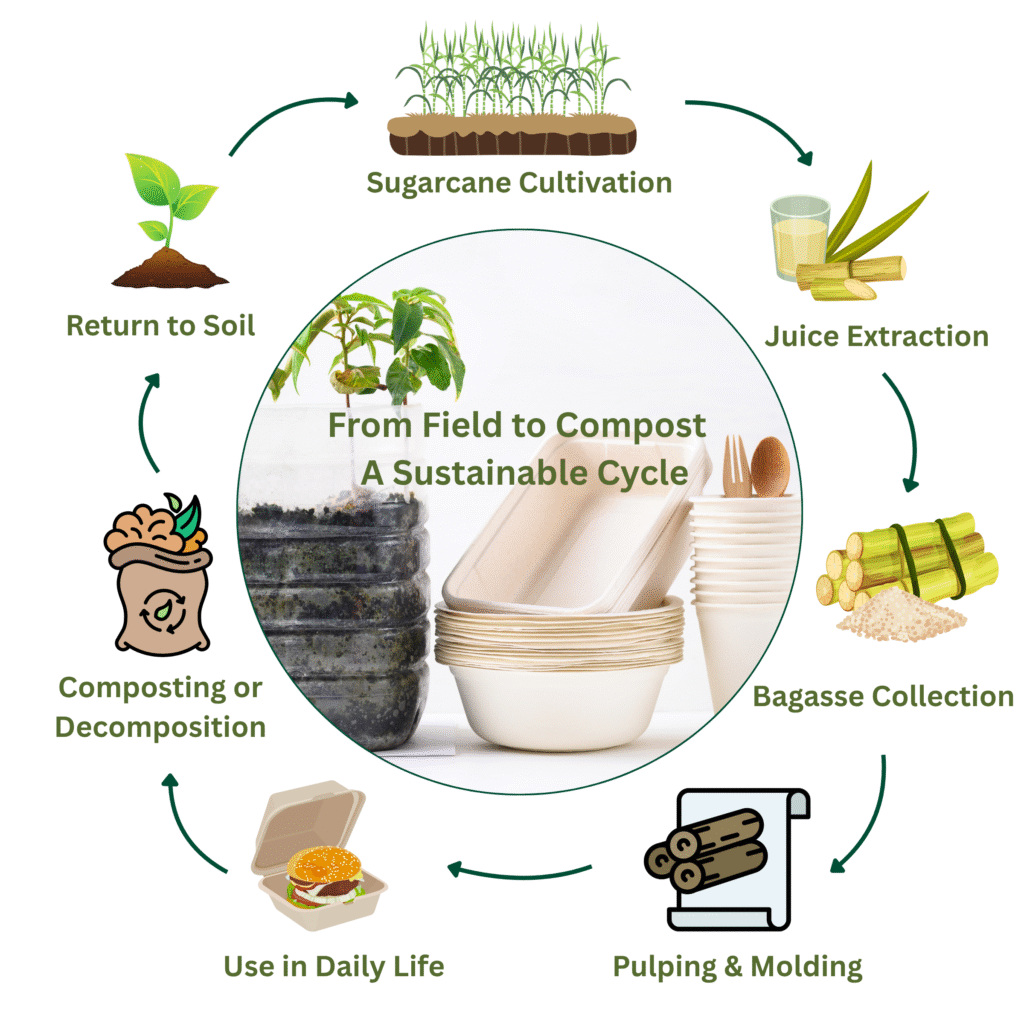
Lifecycle of Sugarcane Bagasse Packaging: from field to compost.
Lifecycle of Sugarcane Bagasse Packaging
From Field to Compost — A Sustainable Cycle
This lifecycle shows how agricultural byproducts are transformed into eco-friendly packaging — and how they return to nature with minimal waste.
- Sugarcane Cultivation: Sugarcane is grown in tropical regions. It’s a fast-growing, renewable crop that absorbs carbon dioxide during its growth.
- Juice Extraction: After harvesting, the sugarcane stalks are crushed to extract juice used in sugar production.
- Bagasse Collection: The dry fibrous residue left after juice extraction — called bagasse — is collected as a byproduct.
- Pulping & Molding: Bagasse is mixed with water and processed into pulp, then molded into biodegradable food containers or tableware.
- Use in Daily Life: These compostable containers are used to serve food — strong, heat-resistant, and convenient for everyday or commercial use.
- Composting or Decomposition: After use, the packaging naturally decomposes in composting conditions or biodegrades over time.
- Return to Soil: The composted material enriches the soil — supporting the growth of the next sugarcane crop and completing the cycle.
What Makes the Difference
- Zero-Waste Philosophy: Nothing is wasted — not even the waste.
- Compostable by Nature: No toxins, no microplastics — just clean breakdown.
- Designed with Purpose: Every part of our process supports people, soil, and future growth.
We believe in a future where everyday essentials are produced with minimal impact and maximum care. From sourcing to production, every step is guided by a respect for the planet and its resources.
The journey of sugarcane doesn’t end in the field—it begins.